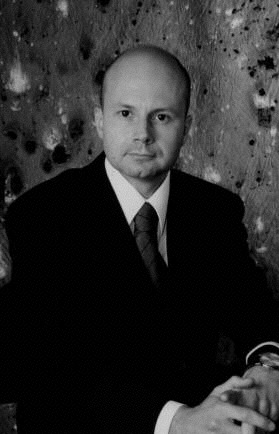
Who I am
CV Profile
With over three decades of progressive engineering and leadership experience—spanning from managing complex, mission-critical systems at D’Appolonia (now RINA Consulting) to my current role as Executive Manager at Studio Ferrando
My professional core lies at the highly demanding intersection of Defense and Robotics
In the realm of Robotics and Autonomous Systems, I have spearheaded the design of autonomous robotic platforms equipped with multispectral vision and GPR for infrastructure inspection (MIMIT)
Beyond traditional consulting, I am deeply rooted in cutting-edge R&D with a visionary focus on ‘breakthrough’ acoustic applications. Currently, my research pioneers reconfigurable acoustic arrays (morphic arrays) driven by Edge-AI and stochastic Monte Carlo optimization. Implementing exact Doppler inversion via generalized Morse wavelets, I am advancing dynamic, shape-shifting beamforming solutions designed to overcome spatial aliasing in high-speed, complex environments—from high-speed UAV aeroacoustics (origami-inspired metamaterials) to distributed underwater AUV sonar swarms.

Computational resources
To support the extreme computational load demanded by my scientific research and complex numerical simulations, I operate a dedicated, fully wired computing infrastructure based on a highly optimized Ubuntu Server operating system. The core of this system relies on a robust Dual Intel Xeon server architecture equipped with extensive ECC (Error-Correcting Code) RAM. This is a fundamental requirement to prevent silent data corruption and ensure the strict minimization of errors during prolonged, memory-intensive mathematical computations—such as those required by the Method of Moments integral technique, stochastic Monte Carlo optimizations, or large-scale 3D acoustic simulations.
In order to guarantee absolute precision while drastically reducing execution times, I employ Nvidia P100 graphics accelerators. These GPUs are specifically designed to sustain extreme, continuous workloads and maximize double-precision floating-point (FP64) computing performance, which is critical for solving complex inverse scattering problems and processing dynamic beamforming matrices without losing numerical stability. This technological excellence is fully leveraged through advanced parallel computing techniques and CUDA integration, allowing me to execute, scale, and deeply optimize highly sophisticated algorithmic models custom-developed in Fortran, C, and Python. This unified hardware-software ecosystem ensures the highest levels of scientific rigor, computational efficiency, and absolute reliability for all my advanced engineering analyses.

Algorithmic diversity
In the context of my scientific research, I systematically adopt a principle of “algorithmic diversity,” approaching the resolution of every single complex problem through the parallel use of multiple mathematical and computational methods. This rigorous methodological approach allows me to conduct a scientific comparison of algorithmic efficiency for each new method investigated, ensuring the ability to formulate accurate qualitative and quantitative evaluations regarding the effectiveness and performance of new computational solutions. Developing and testing heterogeneous algorithms for the same physical problem offers multiple crucial benefits. First, it ensures a robust cross-validation of the results: the convergence of independent mathematical techniques towards the same solution certifies the absence of numerical artifacts or systematic errors inherent in a single model. Second, this algorithmic plurality provides a formidable tool to counteract numerical instabilities and mathematical ill-conditioning—frequent criticalities in advanced electromagnetic and acoustic simulations. Finally, the direct comparison between different approaches allows me to pinpoint the optimal algorithm with surgical precision in terms of scalability, memory footprint, and execution times, thereby maximizing the utilization of parallel computing resources. Ultimately, algorithmic diversity not only elevates the robustness and reliability of the entire research framework but also provides a comprehensive analytical overview of the limits and true potential of each computational technique.